

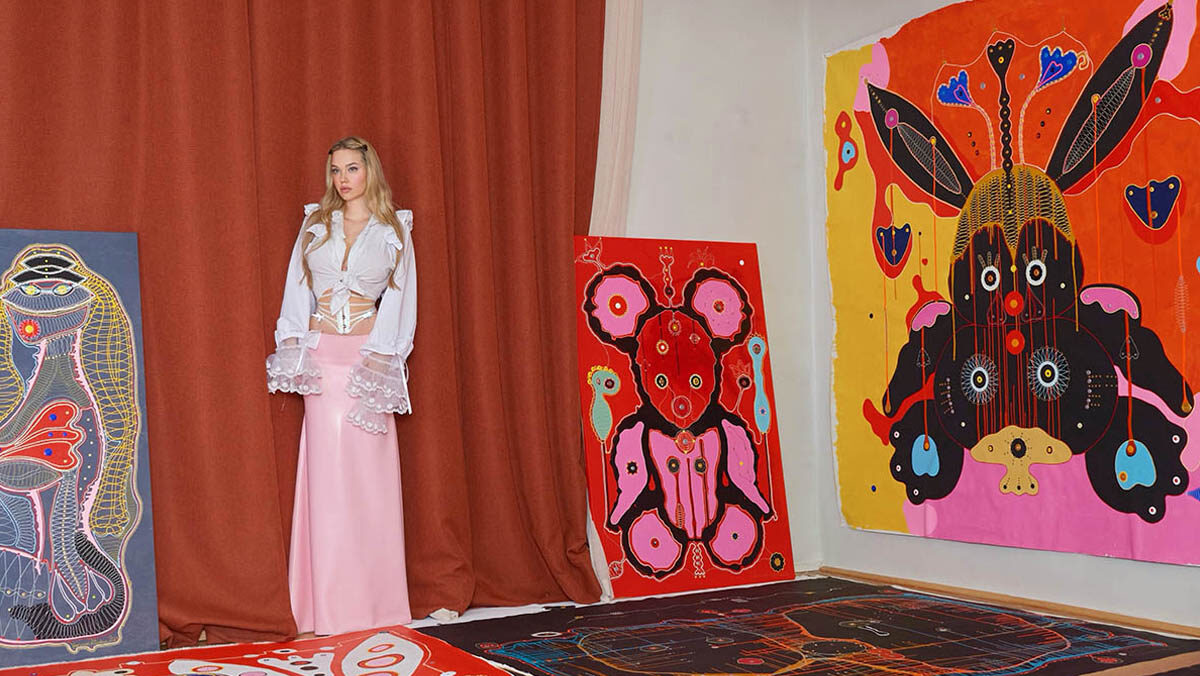
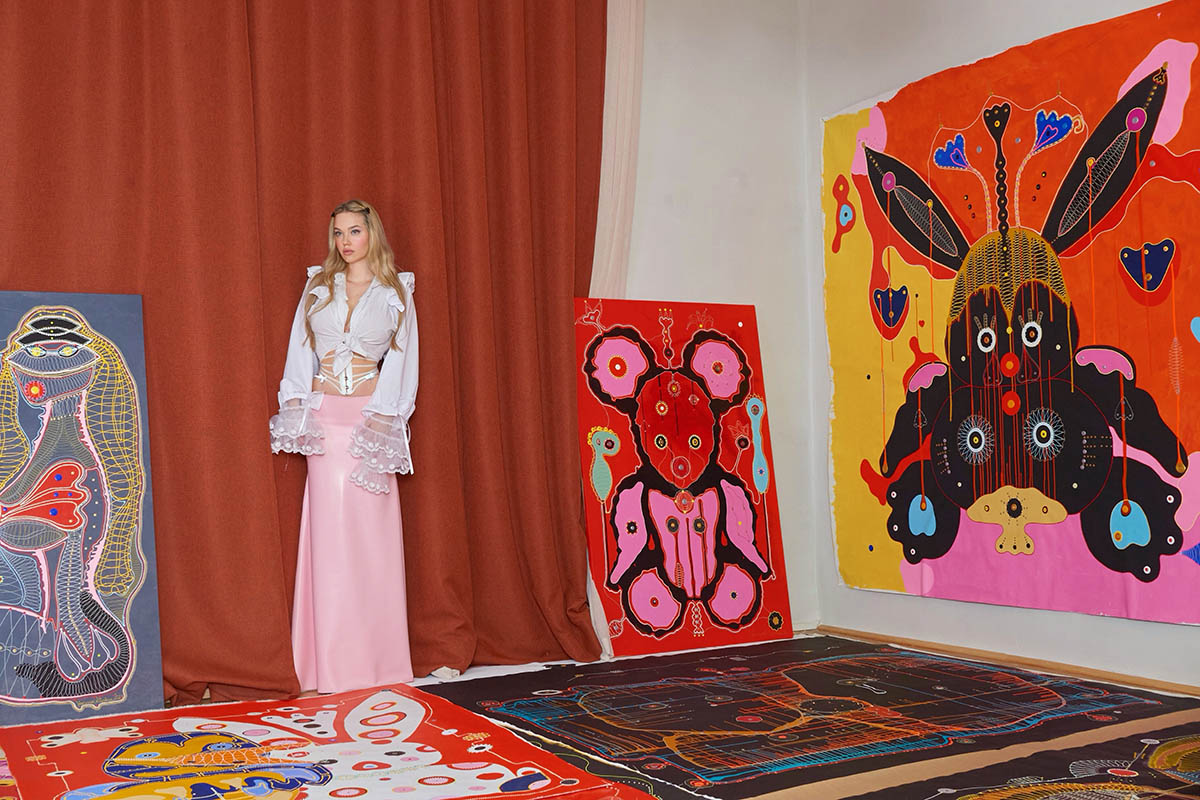
Her work routine is pretty persistent, and her enjoyment of balance and freedom is something she keeps creating with her paintings. Art historian and curator Marija Nujic, with whom Vanessa is working at the moment, was also there and shared with us her perspective on Vanessa’s work.
Introduce us to your background. When did you start painting? What were your first tries, and where did you find the trigger to get you started?
I was born in Salzburg, in the countryside, so my three siblings and I grew up in the untouched nature. My children, who now grow up in the city, even call my hometown „the wilderness.“ I started painting two and a half years ago. But creativity was always a big topic in my family; it was playful growing up. My mother always introduced us to a way of looking at things consciously, especially in nature as the creation of God. My father as well; this part of the family is really on the creative side. From a young age, I was taught that we don’t always need to buy stuff or ask for stuff; we could also build things on our own and realize our ideas and visions. I paint in the same way now as when I was a child; I always do very detailed drawings and paintings. I also loved writing in school, so my handwriting was always super clean. When I was traveling and living in different places, such as Munich, Antwerp, and Beijing, I always enjoyed the places with a creative spirit, so when I settled in Vienna after many years of living across different continents, I found the time and rest to start painting. I started quite out of the blue and never stopped it from that moment on. From the beginning, for me as a very down-to-earth person, this finally felt like magic.
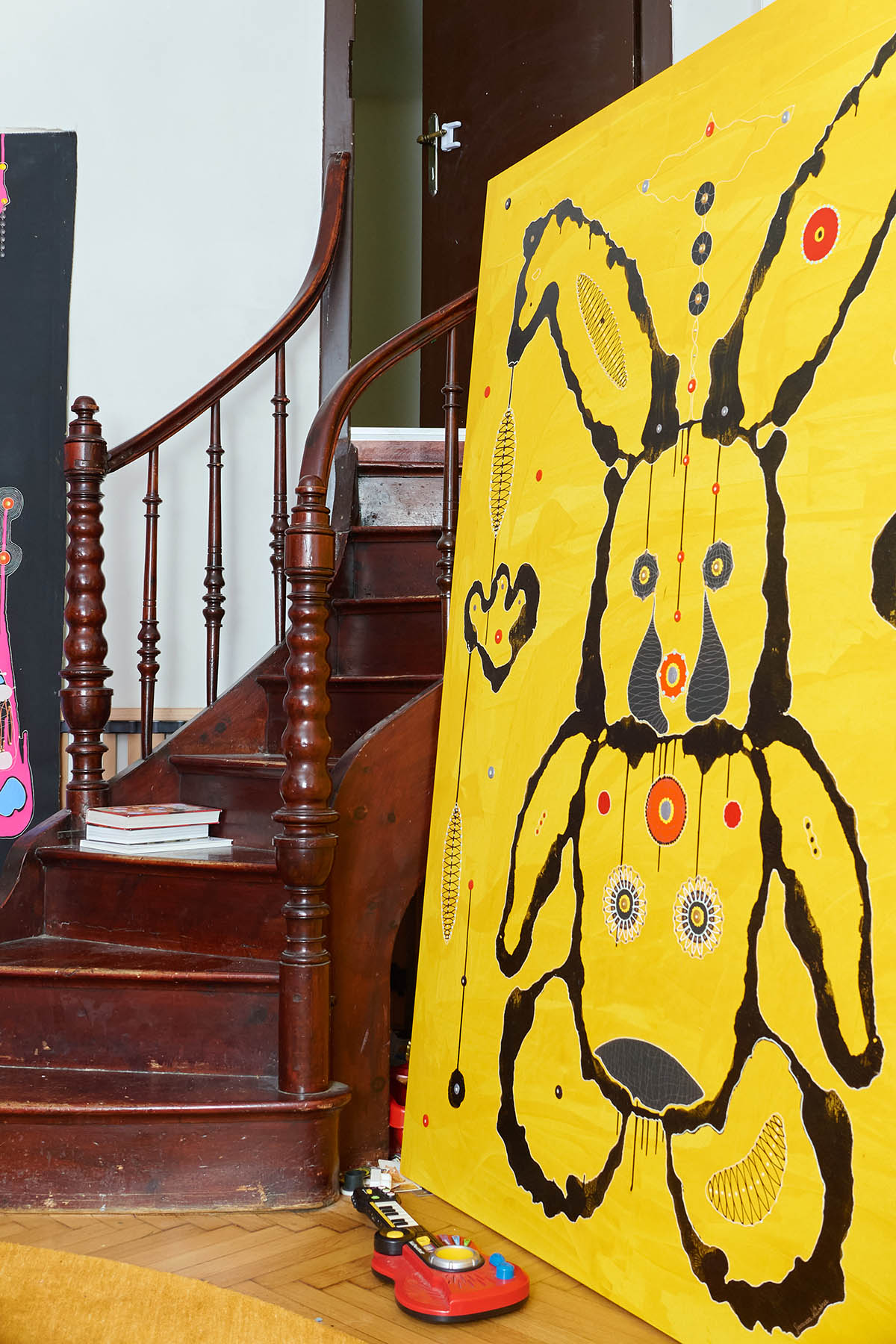
How did your first painting look, and how were your first attempts?
I was going through a tough time when I first started, since I only enjoy company when I feel good and happy, but in difficult times I need to be on my own, and I think that all of it needed to happen to paint and keep painting. Art is something I can pursue on my own, without a recipe or someone instructing me on what to do. I liked that I could feel free while painting; this freedom to do things the way I envision them is important to me. I became confident quickly and never felt insecure about my art. I never met any other activity that satisfied me in every possible way. In every state of mind, no matter if it is good or bad, I enjoy painting. There was not one moment in the past three years when I thought I didn’t want to paint.
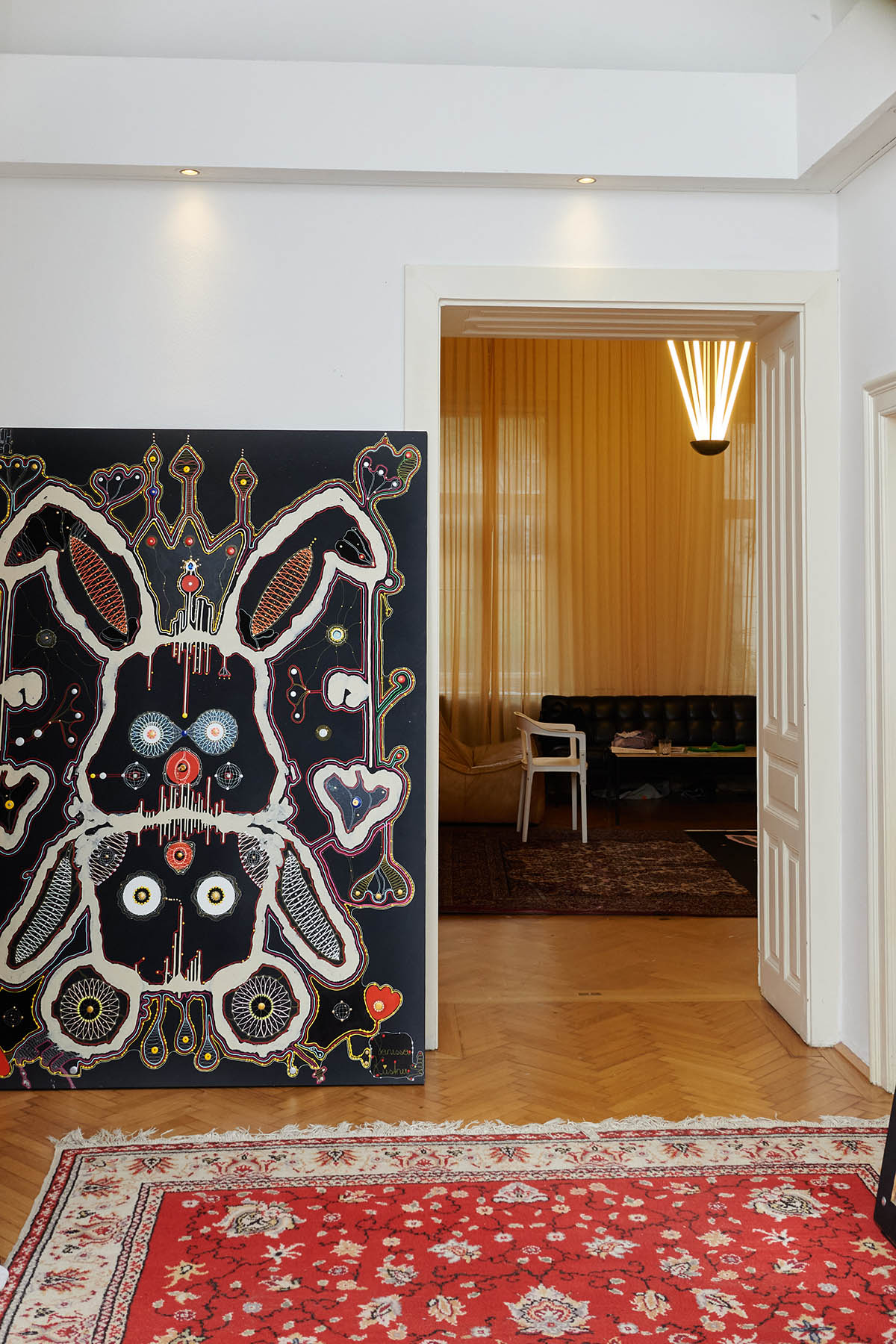
Vanessa Küstner / 凡妮莎 / VAooKI / 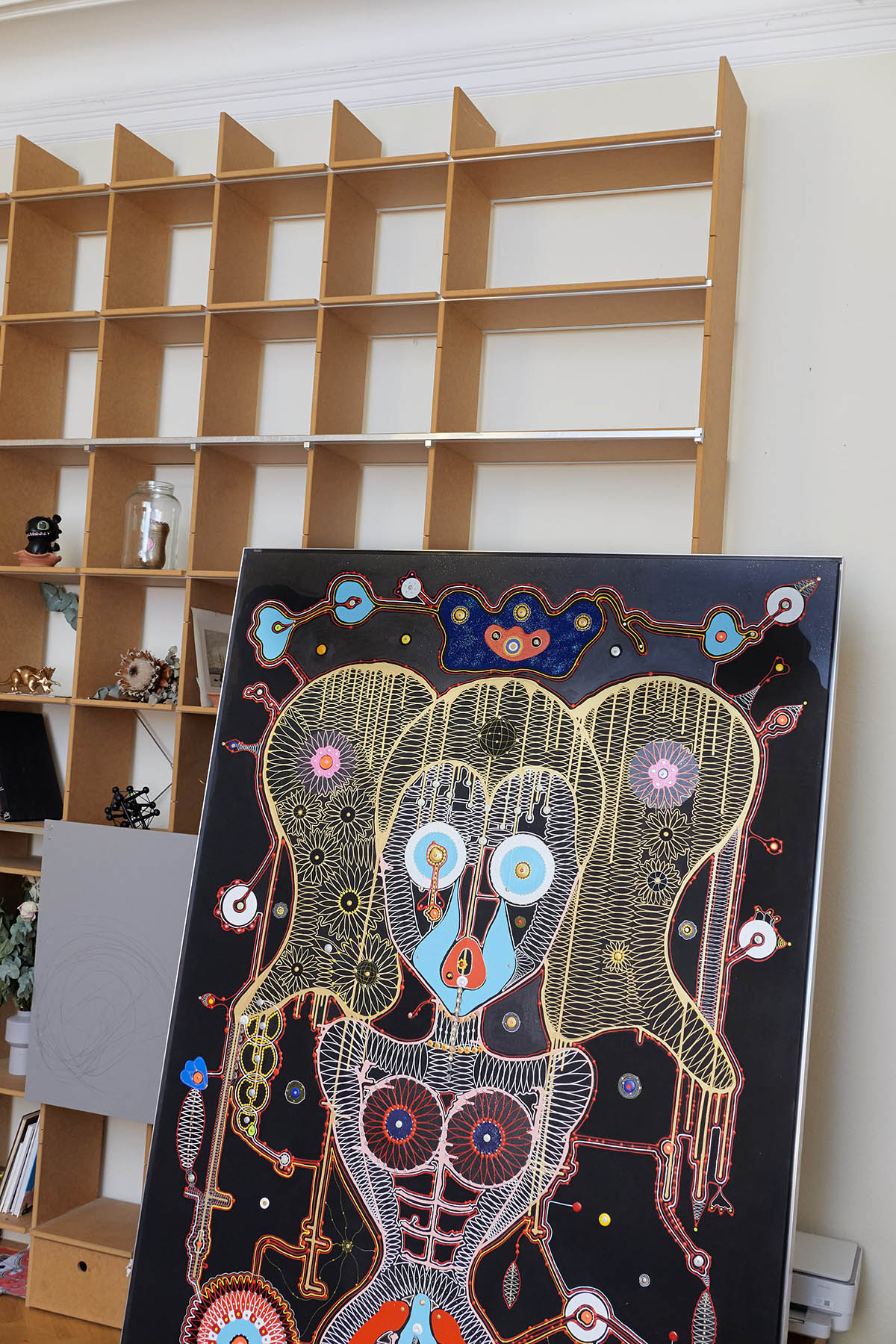
Vanessa Küstner / 凡妮莎 / VAooKI /
How has your family reacted to your ambitious move to start painting seriously?
Even though there are a lot of creative people in my family, I knew they understand art and creating stuff for the sake of enjoyment… and not from an ambitious, motivated place. But one family member, my granduncle Johann Küstner, once made headlines as a talented painter and counterfeiter. The story goes that he was an outstanding painter from a young age. He had support from teachers to go to art school because of his exceptional talent. However, since his family were farmers and not wealthy, he had the idea to use his talent for painting money. He constructed a printer, combining painting and printing. In the cellar of their farm, he printed and painted money with his friend. They were only three successful counterfeiters ever in Austria, and they were among them at just 17 years old. They were only discovered because suddenly they had a lot of money to spend. Back then, it was a big thing, and they even interviewed his former teacher who said, „Yes, this young boy, he was always outstanding, and he had charm; at seven years old, he was already painting perfect portraits of his friends. He gained so much respect for it from his surroundings. It was sad that he decided to use his talent for criminal purposes and ended up in prison, but yes, he painted hyperrealism.“
Download the full article (in German) about Johann Küstner here: Stadtgemeinde Neumarkt – Stadtinfo November 2023
You found your language from the very beginning. Where did it come from?
It is a language I already had as a child; for me now, the task is only to remember it and find it again through all the experiences and distractions over the years, which felt like seven lives. To develop an idea of how I was thinking and who I was back then to find my authentic identity. As I was getting older, I got infected by ideas and concepts of society that I quite tried to fulfill as a perfectionist, especially as a woman, wife, and mother. It took me a little bit to find my pure authentic core and bring it back to my initial language. I didn’t study art or anything; I just tried to paint without sacrificing and painted for myself, for my peace and enjoyment, and also in search of answers to my way too many unanswered questions, which I knew I would only find myself by taking my time to reflect and think. During painting, my main activity is thinking. The art I start from is an instinct, an impulse, from a playful, authentic place, so whatever comes out of it would be perfect for me and therefore also for the audience. Something nearly automatically works best for me. If I need to concentrate too much, I feel like it’s not the right thing for me; furthermore, I am not interested in that; I do stuff with passion for which I don’t need to fight; I like things that come easy without trying too much. And creating art feels like my vocation; I don’t need to learn, study, or concentrate on it. I so much love the fact of creating visible art, and besides that, I have hours to think and philosophize.
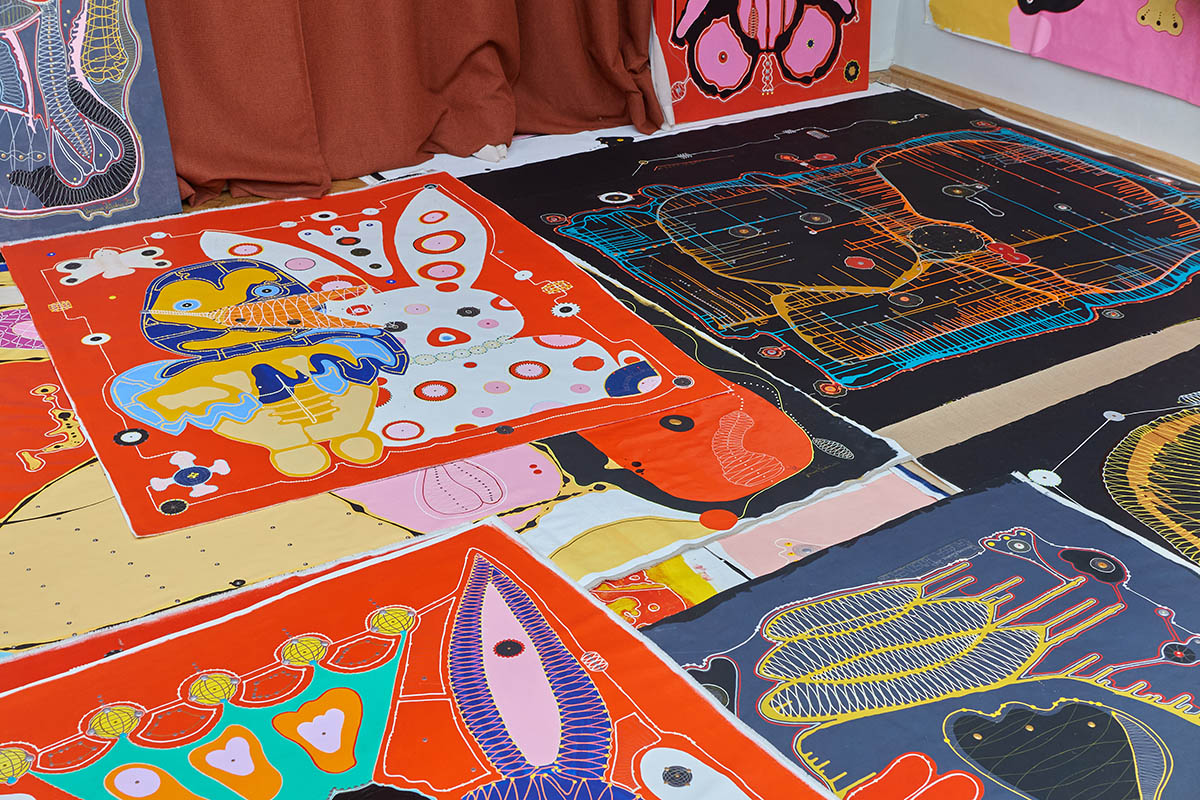
Do you like symmetry?
Yes, I think it is calming. Symmetry and a clean result are my aesthetic demands on my work, and I am so into details! I always paint living creatures, so when you observe a painting longer and longer, you feel more and more connected. I would never paint a car, bag, or something. To feel depth and connection, I need to see expression. Also, I like to do certain things that build a little mystery inside of the painting; I hide stuff, symbols, and numbers with meaning. A very important number in my life is number three; I have it nearly everywhere in my paintings. This one element is an abstracted heart with the three bows, for either my three kids or three siblings; they mean everything to me. Since I started painting, I have become a spiritual person, which I never was before. I paint about 8 to 18 hours a day, I have this amount of time cause I never need more than 4 hours of sleep. And while doing it, I enjoy the silence of the night. Then, out of an impulse or instinct, I paint stories, and sometimes my painting will probably just tell or express a feeling. But in the end, everything just makes sense and is a perfectly completed creation for me. It’s so individual what people see and associate with art, with the forms or a certain color, but my twin sister always knows, just by looking at my painting for a second, how I must have felt during its painting process. I can’t hide anything from my twin sister; she is the most empathetic person in the world and sees through me as if I were glass. By the way, glass is a material I like to work with.
How does art make an impact on other parts of your life?
Art is a product; it is an outcome of creativity. Painting makes me calmer; it makes me take my time and have balance, and probably it makes me wiser.
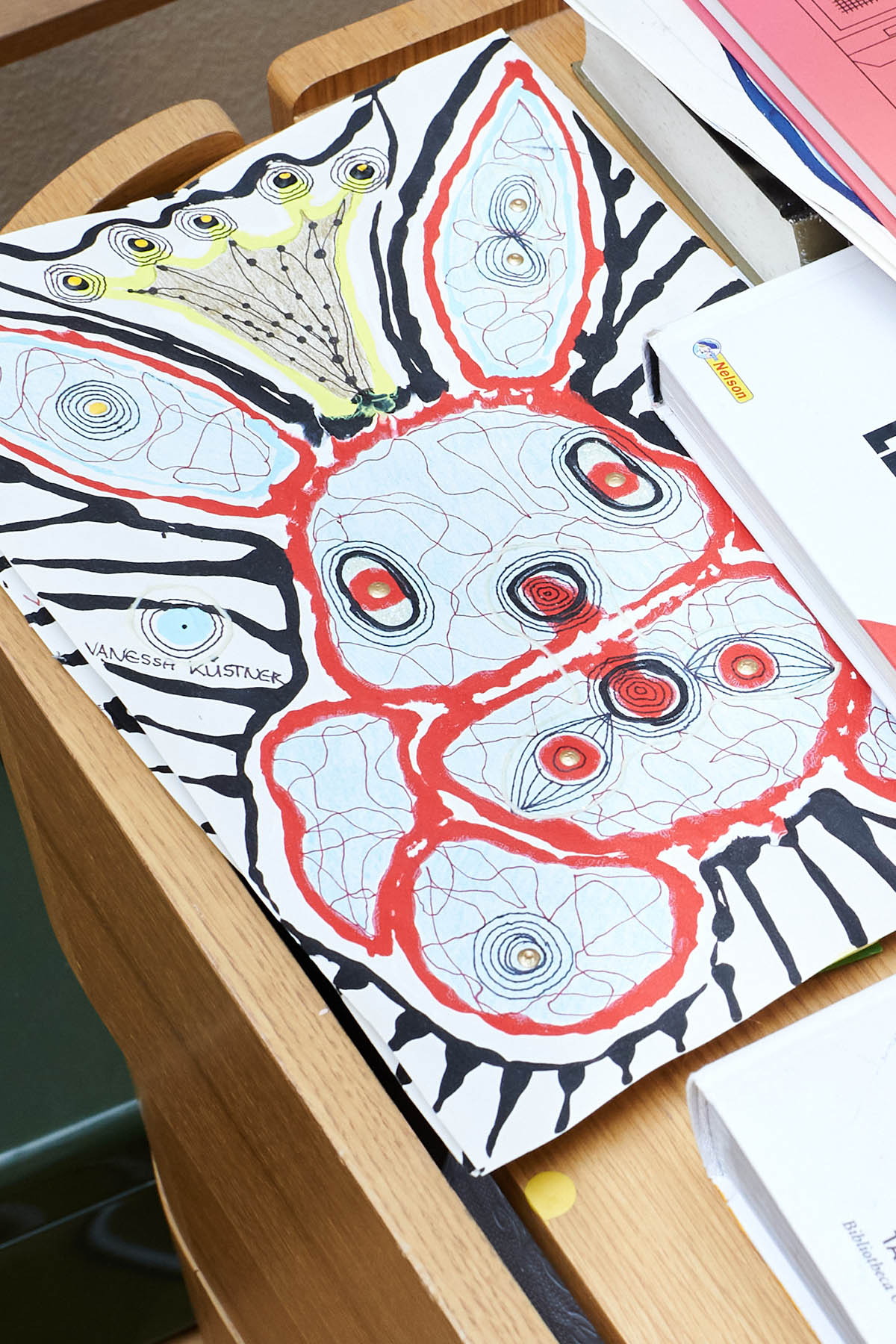
In your paintings, animals and human-like figures often appear. Tell us a bit more about the connections between nature and expressionism in your paintings.
I was never into technology or material stuff but always on the side of biology, psychology, and this social thing between all living creatures. Nature as it is is what I cherish, and that is why I love to paint what is created by nature. We live in cities, and to me, it’s quite astounding that animals don’t coexist with us in the same manner. Instead, we’ve created a situation where we don’t live in harmony with them. Animals are pure; they can ground, and I enjoyed being surrounded by animals in my childhood. I love animals with innocent appearances, such as bunnies and sheep, and I wish my kids could live in a house full of real animals and not just painted ones.
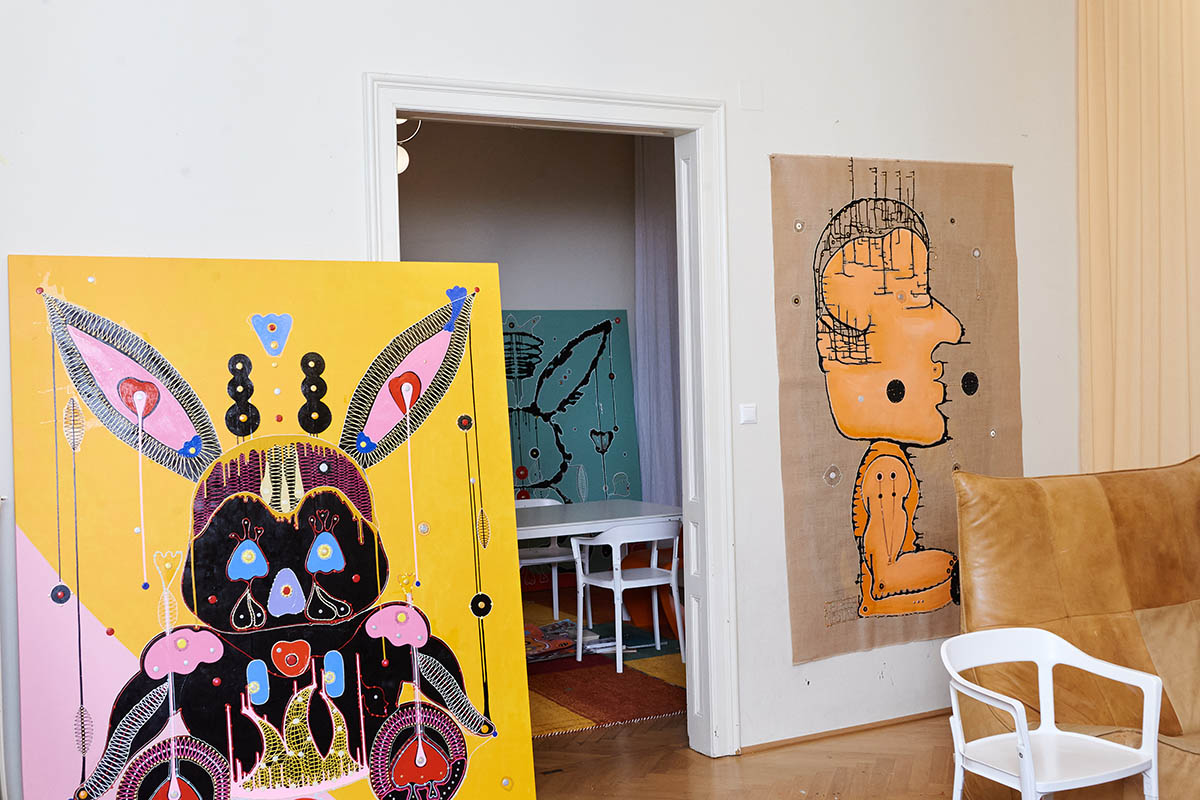
Do you have a sketchbook?
No, I am starting from a blank canvas, but I have so many ideas with it, so there is an inexhaustible source for me.
How often do you work?
Every day, I kind of always paint. Kids are often next to me when I paint, and I let them also paint the surfaces where precision is not required. I do communicate a lot with my kids during painting. Also, when my friends are with me in the studio, I can sit down and paint and still talk with them very normally.
Are you listening to music while painting?
I do; I have a whole mix on Spotify that I am listening to while working. Music is such a gift to all of us.
Who were the first persons to help you and show you around from the very beginning?
I am a person who doesn’t like to ask for help and prefers to handle things independently, partly for the experience, but more often because I find it even harder to explain my vision to others than to realize it by myself. However, there are individuals with whom I share a connection and a level of understanding, such as Marija Nujic. I admire her work and artistic approach, and she has been incredibly supportive. Before I began exhibiting, Everette Taylor, the former CMO of Artsy, traveled from New York to Vienna to view my art and offer valuable advice. As I gained more exposure through exhibitions and presentations, I caught the attention of the renowned art critic Jerry Saltz, who expressed admiration for my paintings on Instagram and noted their special energy. Over time, my studio has welcomed many interesting visitors, and last year, I had exhibitions in Vienna, Madrid, and Palma in collaboration with the Gerhard Braun Gallery from Madrid. Additionally, I exhibited two paintings at an art fair in Madrid. Currently, I am hosting a solo show at Galerie Gerhald Hartinger in Vienna. I appreciate the balance between working and painting in solitude and collaborating with gallerists and other individuals in the art scene.
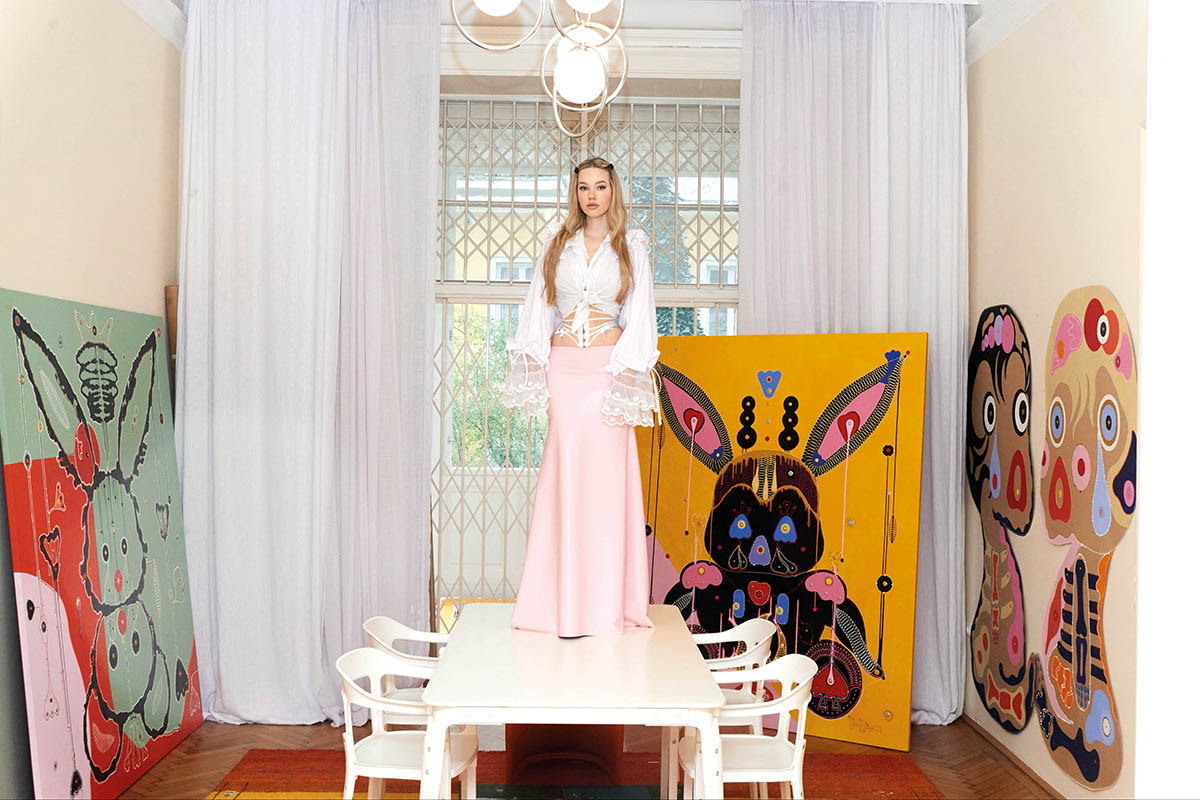
Marija, tell us about your connection to Vanessa and how it came to the collaboration.
Marija: We met in a gallery in Vienna, where I was working with other artists. And then one day, Vanessa showed me her paintings, and I told her I liked them, and she should keep doing them, she should keep producing art! After two years, I was so surprised to see more than 500 artworks that were beautifully done. The forms, the lines. She has her style, and she is confident in it. And she has this happy feeling that she shares with the viewer.
What do you like the most when it comes to working with Vanessa?
Marija: I’m just trying to offer her some advice and the freedom she needs to make her own decisions and enjoy the process. The next step would be to transform the new studio into a showroom, thus supporting her independence.
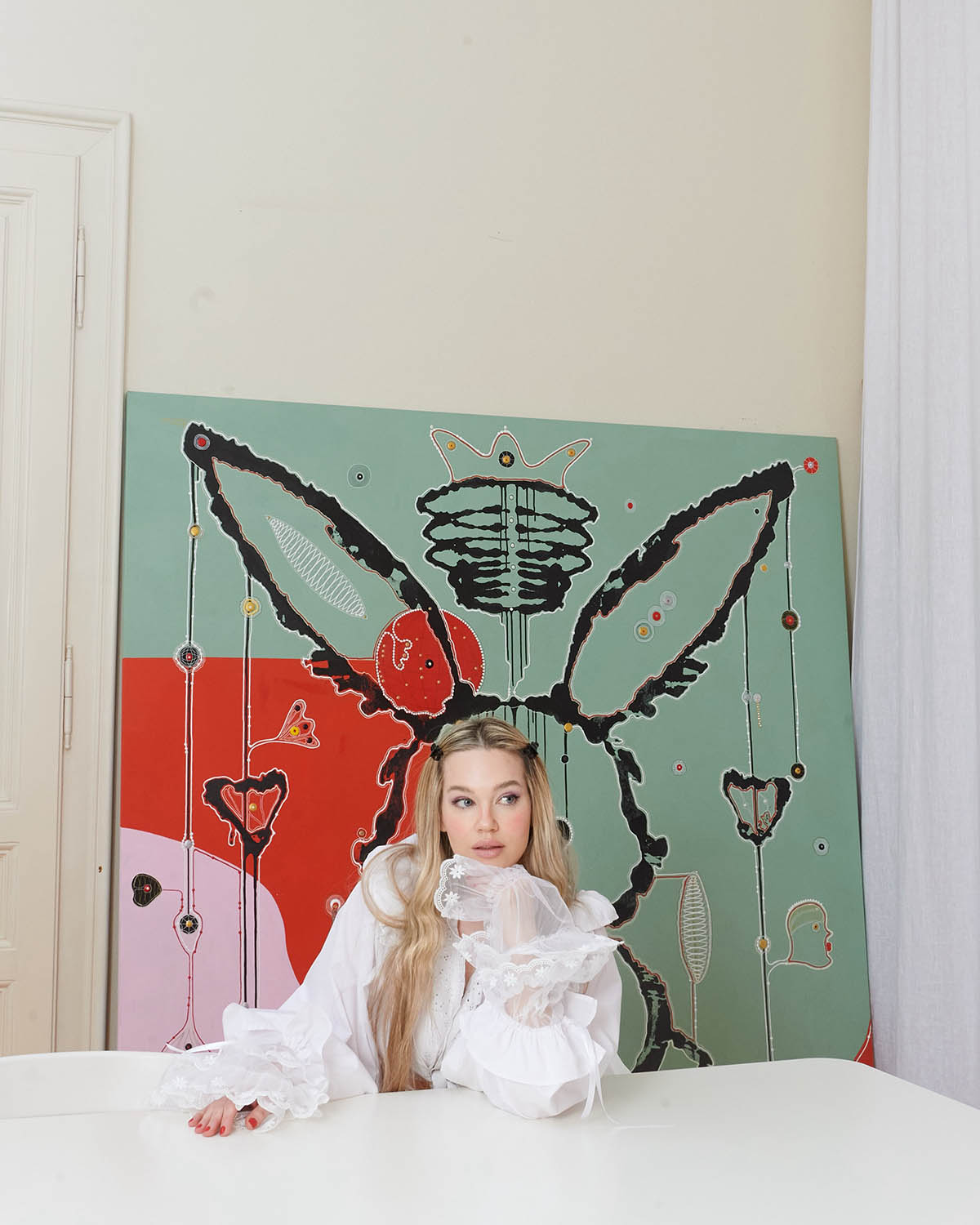
Vanessa, what are your other planned projects?
I have a solo exhibition at Galerie Gerald Hartinger until the 19th of April, and I am in communication with a gallery in London. Also, a project in Mexico is planned. My project is progressively transitioning to a physical studio, and I am thrilled that it will be located in the Neubaugasse in Vienna. I intend to explore working with various materials, installations, and more. Since childhood, I have often dreamed of creating worlds of entertainment filled with beautiful, cute creatures, and this aspiration remains dear to me. I am a little bit late with my website, so this will be next, together with Marija.
Vanessa Küstner – www.instagram.com/vanessa_kuestner/